.png)
Kalama Methanol Market & Greenhouse-Gas Emissions Analysis

Updated: Aug 28
A market-based framework for evaluating global greenhouse-gas emissions
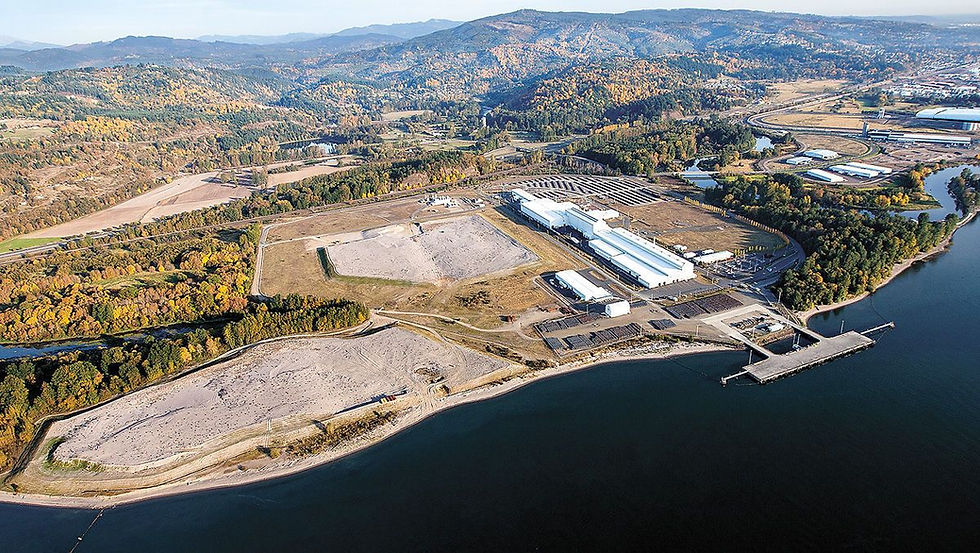
A proposed methanol-export facility on Washington’s Columbia River raised a question with global consequences: Would its output displace higher-emitting supply pathways, or add supply to a growing market? Greene Economics conducted market analysis for the Washington State Department of Ecology’s Second Supplemental Environmental Impact Statement and life-cycle review of greenhouse-gas emissions from natural-gas supply through international shipping and end use.
Earlier environmental review assumed the facility would displace an equivalent quantity of coal-based methanol in China. Ecology needed a more complete market analysis before making a shoreline-permit decision—one that considered Chinese coal- and natural-gas-based production, imported methanol, naphtha-based olefin production, and possible use of methanol as fuel. Demand growth, energy prices, technology, and policy further complicated the picture.
Our team reviewed earlier assumptions and examined both global and Chinese methanol markets—supply, capacity, costs, and trade, alongside demand and end uses. We developed alternative market scenarios to compare modeled emissions with and without the proposed facility, testing how production sources, demand growth, oil prices, and methanol end uses could change results over the facility's anticipated operating life. The analysis showed the proposed facility could produce lower life-cycle emissions than some competing supply pathways, including coal-based methanol. But it also showed that total global methanol emissions could rise with or without the facility—meaning its construction would not necessarily reduce them. How much substitution would actually occur, and its ultimate effect on emissions, remained uncertain.
Ecology ultimately denied the Shoreline Conditional Use permit after finding significant greenhouse-gas impacts, and the developer later terminated its Port of Kalama lease, ending the proposed project.